How to Verify Casino Visitor Information in Thừa Thiên Huế
Verify casino visitor information in Thừa Thiên Huế by confirming a venue’s identity, address, access, and policies before you plan a visit.
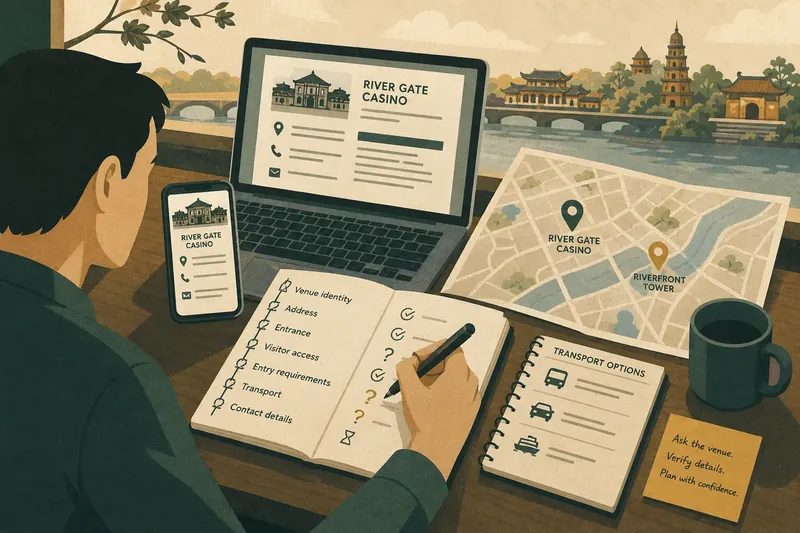
The most common mistake with casino visitor information in Thừa Thiên Huế is treating a search result as confirmation that a venue is open to visitors. That can send you toward an unverified address or leave basic entry and access questions unanswered. A listing is a lead, not a visit plan.
Use current sources to establish whether a specific casino venue can be identified and what it says about visiting. I cannot confirm a current casino venue or its visitor arrangements from the information provided here, so this guide does not name one or present local access details as fact. The practical task is to verify each detail before relying on it.
Establish that the listing identifies a real venue
Begin with the exact name shown in the listing, then look for a current official page or another channel clearly controlled by the business. Check whether it provides a street address and a way to contact the venue. A map pin, directory entry, social post, or old travel mention can help you investigate, but none alone establishes current visitor status.
Keep three kinds of names separate: the business name, the place or building name, and the administrative area. Similar names can point to different locations, while a broad location label may not identify an entrance. If sources disagree, do not choose the most convenient result; ask the venue to clarify its identity and address.
Verify the address and the route independently
Compare the address in the venue’s current official information with a current public map. Check that the map label and street location make sense together, and look for a clearly marked entrance rather than assuming a pin marks the visitor entrance. If the address is absent, inconsistent, or too broad to locate, contact the business before arranging travel.
For transport, consult a current source that covers your actual starting point and destination. A route shown to a nearby district does not establish transport to a venue entrance. If the source does not cover the full journey, confirm the missing part with a suitable local transport provider or the venue.
Think of the process like matching a parcel label to a building: the name, address, and entrance each need to point to the same place. One matching detail is useful, but it does not settle the others.
Confirm the conditions that affect your visit
Check the venue’s own current information for visitor eligibility, entry rules, operating arrangements, and the services you intend to use. These details can change, and a general listing may not answer a specific question. If an instruction is unclear or missing, ask the venue directly and keep the response with your planning notes.
Do not infer that a venue is open to the public simply because it is described as a casino, appears on a map, or is mentioned in a travel listing. Confirm that visitors are accepted and ask what identification, booking, or other conditions apply. If you cannot obtain a clear answer, treat the visit as unconfirmed and avoid making plans that depend on it.
What should you check before setting out?
How can I tell whether a casino listing is current?
Look for a current official venue page with a consistent name, address, contact method, and visitor information. If those details are absent or conflict with other current sources, contact the business and do not treat the listing as confirmation.
Can a map listing confirm that visitors are welcome?
No. A map can help locate a named place, but it does not establish visitor eligibility, entry conditions, or current operating arrangements. Confirm those points through the venue’s own current information or direct contact.
What should I do when the address and map do not match?
Pause your travel plans and ask the venue to confirm its current address and visitor entrance. If it cannot clarify the discrepancy, treat the location as unresolved rather than selecting one source by guesswork.
Which source should answer a transport question?
Use a current transport source that covers the journey you plan to take, including the relevant destination area. If it stops short of the venue or does not cover your starting point, seek a suitable local source or ask the venue about access.
Use a decision list for the details that matter
Record the source and what it actually confirms. For every unresolved detail, choose an alternative action instead of filling the gap with an assumption.
- Venue identity: If a current official source names the business consistently, use that name for further checks; if names conflict, ask the business to confirm its identity before relying on a listing.
- Address: If the official address matches a current public map, use that location for route planning; if it does not match or is incomplete, contact the venue and postpone location-dependent plans.
- Entrance: If the venue identifies a visitor entrance that aligns with the mapped address, use that access point; if no entrance is identified, ask the venue rather than choosing a map pin or service entrance.
- Visitor access: If current venue information clearly says visitors may enter and explains the conditions, assess your plans against those conditions; if access is unstated, ask directly and treat the visit as unconfirmed until answered.
- Entry requirements: If the venue clearly states the requirements relevant to you, prepare accordingly; if the wording is unclear or silent, request clarification before setting out.
- Transport: If a current transport source covers your starting point and the venue area, use it to plan the journey; if it covers only part of the route, consult another suitable source for the missing segment.
- Contact details: If the contact method appears on a current official channel, use it to resolve open questions; if the channel cannot be verified or does not respond, do not substitute an old directory entry for confirmation.
Work through an invented visitor plan
Say you are considering a visit to an invented venue called River Gate Casino. Your starting notes contain one official-looking page with the venue name and an address, a public map with a similar but not identical place label, and no statement about visitor entry or transport.
First, you compare the exact address on the page with the map. Imagine the street matches but the map pin carries a different building name; you mark the address as partly matched and contact the venue to confirm that both labels refer to its location. Next, you ask whether visitors may enter and what conditions apply. Suppose the reply confirms visitor access but does not identify an entrance; you record access as confirmed and entrance as unresolved, then ask for the entrance rather than relying on the pin.
Finally, you check a current transport source for your chosen starting point. If it covers the area but not the last part of the journey, you seek a separate local source for that segment. The resulting decision is specific: proceed with planning only after the venue confirms the address and entrance, use the stated entry conditions, and leave the final transport segment unplanned until an appropriate source covers it.
For casino visitor information in Thừa Thiên Huế, the useful distinction is between a detail that has been confirmed and one that merely appears in a listing. Keep those separate in your notes; if a venue cannot confirm the point your visit depends on, choosing another plan is more sensible than traveling on an assumption.